The Twelve Angled Stone in Cusco is one of the most recognizable examples of Inca stonework in Peru. Set into a wall on Hatunrumiyoc Street, this carefully shaped block is famous for its irregular outline and exceptionally close fit with the surrounding stones. Its importance lies not in monumental size alone, but in the craftsmanship required to make a complex stone work as part of a larger masonry structure.
Known in Spanish as the Piedra de los 12 Ángulos, it is also an accessible introduction to Cusco’s layered history. Understanding its construction, cultural significance, location, and conservation helps turn a brief photograph stop into a meaningful encounter with Inca architecture.
What Is the Twelve Angled Stone?
Twelve Angled Stone Cusco: A Quick Introduction
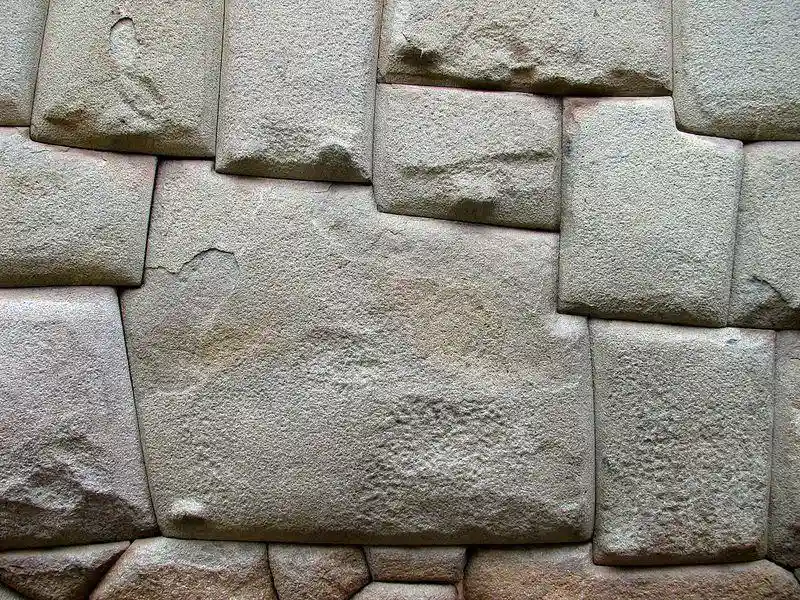
The Twelve Angled Stone is a large, irregularly shaped block incorporated into an Inca wall in Cusco’s historic center. Its name refers to the twelve corners along its visible outline, where the edges change direction to fit adjoining blocks. Rather than following the rectangular pattern familiar from brickwork, the stone belongs to a system of polygonal masonry. Each block has its own shape, yet the finished wall forms a closely fitted, coordinated whole. The stone remains in its architectural setting rather than being displayed as a detached museum object.
Piedra de los 12 Ángulos: Name and Appearance
Piedra de los 12 Ángulos is the Spanish name commonly used for the attraction. English-language descriptions vary between “Twelve Angled Stone,” “Twelve-Angled Stone,” and “Twelve Angle Stone,” all referring to the same block. Its visible face is broad and unevenly polygonal, with several changes of direction around its perimeter. The surrounding stones meet these edges with remarkable precision. Surface color varies with lighting, moisture, and weathering, so photographs may make the block look slightly different from one visit to another.
Its Connection to Inca Architecture
The stone illustrates an important feature of Inca architecture: carefully worked masonry adapted to the shape and structural role of individual blocks. Prestigious buildings often used finely dressed stone, although construction methods varied across the empire according to available materials, labor, and purpose. The Twelve Angled Stone is therefore an exceptional example, not a model for every Inca building. Its significance becomes clearer when viewed alongside the rest of the wall, where many stones contribute to the same tightly integrated construction system.
History of the Twelve Angled Stone
Historical Context: Cusco as an Inca Capital
The history of the Twelve Angled Stone belongs to the wider development of Cusco as the political and ceremonial center of the Inca state. During the imperial period, particularly in the fifteenth and early sixteenth centuries, important compounds expressed authority through their layout, materials, and workmanship. Fine stone walls required organized labor, specialist knowledge, and access to suitable rock. In that setting, sophisticated masonry was both practical construction and a visible demonstration of the resources available to the ruling elite.
Inca Construction and the Original Building
The wall containing the Twelve Angled Stone is generally associated with an Inca elite residential or palace compound. Its surviving masonry gives visitors a sense of the quality expected in important urban architecture. However, the exact date when this individual block was shaped and placed cannot be established simply from its appearance. It is more accurate to understand it within the broader Inca construction tradition than to assign it an unsupported installation year. The surviving street-facing wall represents only part of a building history that continued through later centuries.
Hatunrumiyoc Street Through Time
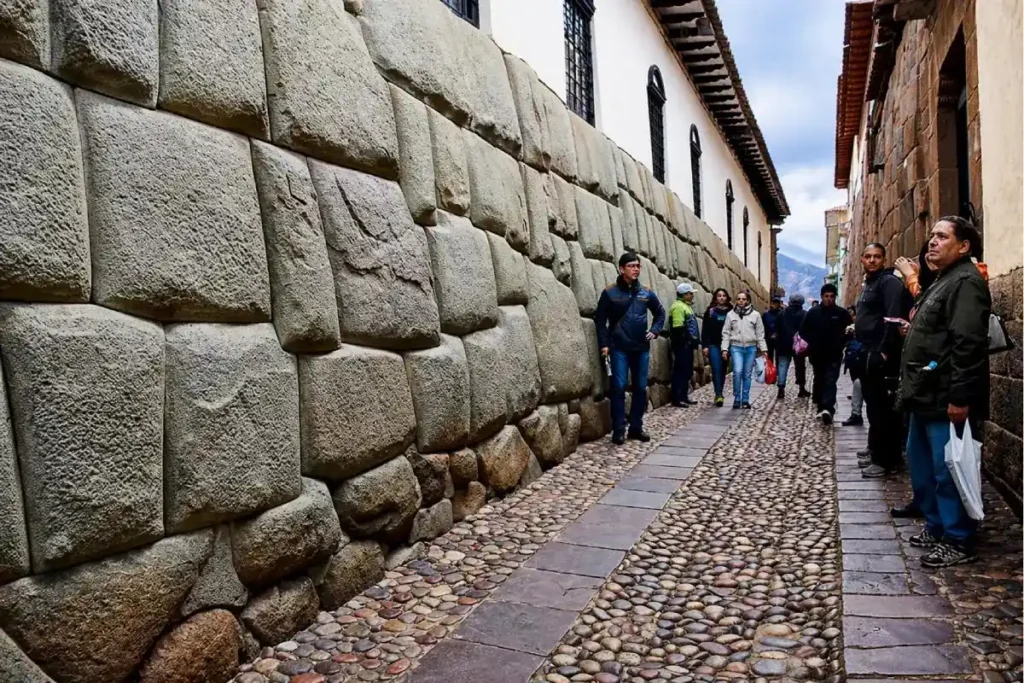
Hatunrumiyoc Street preserves a striking encounter between Inca foundations and the city that developed after the Spanish conquest. Older stone walls were incorporated into later buildings, allowing sections of pre-Hispanic architecture to remain visible within an inhabited urban landscape. The street’s name is commonly interpreted as referring to a large or great stone, with spelling variations reflecting different ways of writing Quechua. Today, the narrow passage serves everyday movement as well as tourism, reminding visitors that this celebrated archaeological feature is also part of a living neighborhood.
What the Surviving Wall Reveals
The wall demonstrates continuity, reuse, and change rather than the survival of an entirely untouched Inca building. Its masonry allows observers to study original construction qualities, while the architecture above and around it reflects later periods. This layered setting is central to understanding Cusco’s historic center. The Twelve Angled Stone is not isolated from the city’s subsequent history; it has endured within it. For that reason, interpreting the site requires attention both to Inca craftsmanship and to the changing buildings and streets that have surrounded the stone.
What Does the Twelve Angled Stone Mean?
Meaning of the Twelve Angles
The most defensible meaning of the twelve angles is architectural: the block was shaped to fit its particular position among neighboring stones. Its twelve corners describe the geometry of that fit. Popular explanations sometimes assign the number twelve to calendars, political divisions, or sacred concepts, but such claims require evidence that is not established for this specific stone. There is no broadly accepted proof that its twelve angles encode a particular message. Appreciating the craftsmanship does not depend on treating the outline as a hidden numerical symbol.
Cultural Significance in Cusco
The stone’s cultural significance extends beyond any proposed symbolism. It has become a recognizable expression of Cusco’s Inca heritage and of the technical abilities of Andean builders. For visitors, it offers a direct encounter with craftsmanship that remains visible in the modern city. Its continued presence also connects architectural history with contemporary cultural identity. That connection should not reduce living Andean traditions to a distant past: Cusco remains a place where Indigenous heritage, language, community life, and historical memory continue to develop.
Why the Stone Is Famous
The Twelve Angled Stone is famous because it makes an extraordinary construction achievement easy to recognize at street level. A visitor needs no specialized equipment to see the numerous corners and close-fitting joints. Its location near central Cusco also makes it convenient to include in a walking route. Repeated appearances in travel photography have strengthened its status as a city landmark. Nevertheless, its reputation should not imply that it is the only complex polygonal stone in Inca architecture; it is a particularly accessible and celebrated example.
Inca Stonework and the Twelve Angled Stone
Precision of the Stonework
The most impressive feature of the Inca stonework is the careful relationship between adjacent blocks. At the visible face, the joints are exceptionally narrow, despite changes in direction along the stones’ edges. Such fitting demanded considerable shaping and checking. The familiar claim that “not even a sheet of paper fits” communicates this precision, but should not be treated as a measurement valid for every joint. Weathering and differences across the wall matter, and visitors should never insert paper, blades, or other objects to test the workmanship.
Fitting Stones Together Without Visible Mortar
The finished face of this fine masonry does not rely on thick, visible mortar beds to compensate for poorly matched blocks. Instead, neighboring surfaces were shaped to fit closely. That distinction helps explain why the wall looks so different from ordinary mortared construction. However, the visible joints do not reveal every detail of the wall’s internal structure. Inca builders used different techniques in different contexts, and observations about this prestigious stonework should not become a blanket claim that every Inca wall was built without any filling or bonding material.
Inca Masonry Techniques and Stone Shaping
Archaeological evidence and experimental work support the use of stone tools, including hammerstones, to work building blocks through repeated percussion and dressing. Abrasion could assist finishing, while trial fitting helped establish the relationship between neighboring surfaces. The complete sequence used for the Twelve Angled Stone itself cannot be reconstructed with certainty. Nevertheless, known techniques demonstrate that patient skilled labor can account for sophisticated results. Claims that the stone required lasers, melted rock, or unknown supernatural methods are unnecessary and unsupported explanations of a human construction achievement.
Why Repeated Adjustment Mattered
Creating a polygonal joint was not simply a matter of cutting a decorative outline on the front of a block. Builders needed to consider the stone’s contact with surrounding masonry and its behavior within the wall. That process likely involved repeated assessment and adjustment rather than a single final cut. Small errors could affect the fit of neighboring pieces, making planning and workmanship essential. Looking closely at the Twelve Angled Stone therefore reveals more than an unusual shape: it suggests the coordinated work required to turn irregular blocks into a stable structure.
Why the Stone Is Architecturally Notable
The stone is architecturally notable because its complex outline functions within an integrated wall rather than as an isolated display of carving. Polygonal joints, substantial blocks, and careful construction can contribute to structural resilience, but earthquake performance depends on the entire building system. Wall geometry, foundations, connections, maintenance, and later alterations all matter. It is misleading to call the Twelve Angled Stone “earthquake-proof” or to suggest that twelve corners alone explain the wall’s survival. Its value lies in demonstrating a sophisticated approach to fitting and assembling stone.
Where Is the Twelve Angled Stone?
Twelve Angled Stone Cusco Peru: Exact Setting
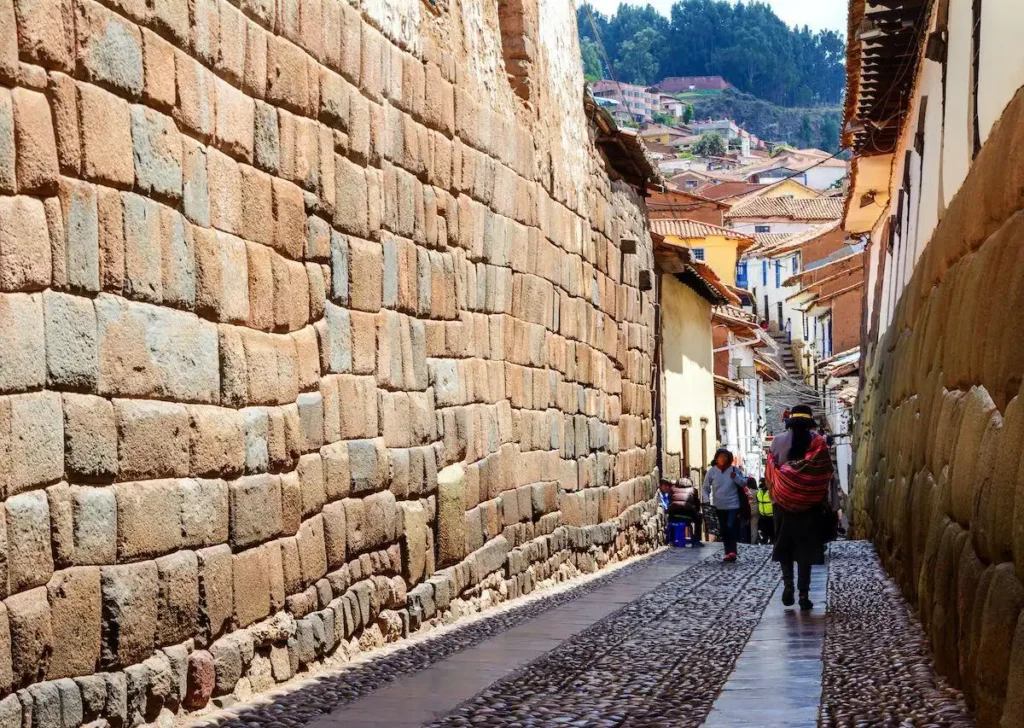
The Twelve Angled Stone is on Hatunrumiyoc Street in Cusco, Peru, within the city’s historic center. It forms part of the street-facing wall of a historic building, making it visible from the public pedestrian route. You do not need to enter the building to see the famous block. This distinction is useful when planning a visit, because access arrangements for nearby interiors are separate from viewing the exterior masonry. Temporary maintenance, conservation barriers, or local street restrictions can occasionally affect how closely visitors may approach.
How to Find It from the Main Square
From Cusco’s main square, the Plaza de Armas, walk toward the northeastern side of the historic center and follow the pedestrian route through the streets leading to Hatunrumiyoc. The walk is short for many visitors, although navigation, crowds, and the effects of altitude can make it slower than expected. Look for the long stretch of finely fitted polygonal masonry. The Twelve Angled Stone sits within that wall, not in a separate monument enclosure. Street names and the surrounding wall are more reliable orientation clues than following a crowd.
Location in Cusco’s Historic Center
The stone’s central position makes it easy to combine with a broader walk through Cusco’s historic center. Nearby streets reveal Inca foundations beneath later buildings, narrow lanes, courtyards, and routes rising toward the San Blas neighborhood. Its urban setting is part of its appeal, but also requires consideration: pedestrians, residents, and local activity share the space with sightseeing groups. Rather than treating the lane as a dedicated viewing platform, step aside when stopping. This allows you to examine the wall without obstructing movement through the street.
Twelve Angled Stone Photos: What to Capture
Close-Up Details of the Stonework
The best Twelve Angled Stone photos often focus on the joints, surface texture, and relationship between neighboring blocks. Gentle, angled daylight can make changes in depth and edge direction easier to see than harsh light falling directly across the wall. A close photograph should still leave enough room around the main block to show how it connects with adjacent stones. Use your camera’s zoom or crop afterward rather than leaning against the masonry. Avoid equipment setups that occupy the narrow passage or require contact with the historic surface.
How to Identify the Twelve Angles
To identify the twelve angles, visually trace the perimeter of the stone’s exposed face and count the distinct corners where its boundary changes direction. The outline is irregular, so some corners are easier to recognize than others. A reasonably straight-on photograph can help you study the shape afterward without standing in the pedestrian flow. Remember that the name refers to the visible outline, not twelve equal sides or twelve faces of a regular geometric solid. There is no need to touch the edges to understand or count them.
Photographing the Surrounding Inca Walls
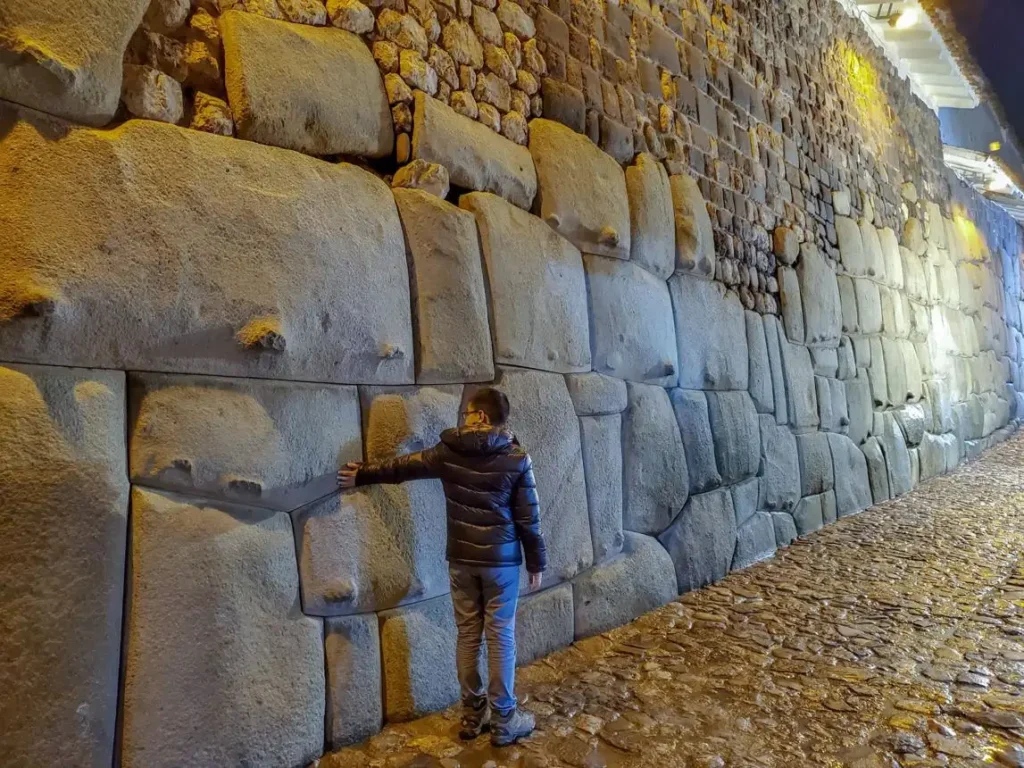
A wider photograph often explains the site better than a tightly cropped portrait of the famous block. Include neighboring stones to show the range of shapes and the continuity of the masonry. A second view along Hatunrumiyoc Street can document the relationship between the Inca wall, later architecture, and everyday urban life. Be considerate when including identifiable people, especially in close foreground positions. Never climb the wall or ask someone to pose against it; photographs can communicate scale and atmosphere without placing pressure on vulnerable historic fabric.
Twelve Angled Stone Damage and Conservation
Conservation Concerns and Surface Damage
Concerns about Twelve Angled Stone damage include deliberate marking, accidental abrasion, repeated touching, and environmental deterioration. Historic stone may appear exceptionally durable while still being vulnerable at its surface and joints. Moisture, deposited pollution, and inappropriate cleaning can affect its condition over time. The stone has been the subject of reported vandalism concerns, but a general visitor guide cannot verify its current condition on any given day. Avoid interpreting every stain, color variation, or irregularity as recent damage; proper assessment requires conservation expertise and contextual evidence.
Protection of the Stone
Protecting the Twelve Angled Stone requires both site management and public cooperation. Monitoring, visitor guidance, and carefully designed conservation treatments can help reduce risks, but interventions must respect the physical properties of the stone and its setting. An apparently simple action such as scrubbing away a mark may remove original surface material or leave chemical residues. Visitors should never attempt to clean, repair, wet, or improve the appearance of the wall. If you notice someone damaging it, notify nearby site personnel or the appropriate local authorities rather than intervening physically.
Responsible Tourism at the Site
Responsible tourism in Cusco begins with recognizing that repeated small actions can create a significant cumulative impact. One person touching the stone may seem harmless, but constant contact across many visits is unnecessary and avoidable. Respect any protective boundary even when other people ignore it, and do not treat a lack of fencing as permission to touch. The same care applies to the surrounding wall, which shares the famous block’s historical value. A successful visit leaves the masonry and the pedestrian space undisturbed for everyone who follows.
- Do not touch, lean on, climb, scratch, or mark the stone.
- Never insert objects into the joints to demonstrate their narrowness.
- Keep bags and camera equipment from rubbing against the wall.
- Follow local instructions and leave any protective barriers in place.
- Allow residents and other pedestrians to pass comfortably.
Visiting the Twelve Angled Stone
Accessibility and Walking Conditions
Visiting the Twelve Angled Stone involves a short outdoor stop, but the surrounding route is not equally easy for everyone. Uneven paving, narrow passages, slopes, and crowds can create difficulties for wheelchair users and people with limited mobility. Cusco’s elevation, approximately 3,400 meters above sea level, may also make a brief walk more tiring than expected. Plan a comfortable pace and rest as needed. Visitors requiring step-free access should check the practical conditions of their approach route rather than assuming that a street-side attraction is automatically fully accessible.
Best Time to Visit
The best time to visit the Twelve Angled Stone is generally during daylight, with quieter morning periods often offering more space to observe the wall. Crowd levels vary with travel season, local events, and group arrivals, so no hour guarantees an empty street. The drier months, broadly May through September, often provide more predictable walking conditions, while the wetter season can bring slippery paving and showers. Soft light is helpful for photographs, but preservation and pedestrian access should take priority over waiting for a particular composition.
What to See Nearby
Nearby attractions include the Plaza de Armas, the streets leading toward San Blas, and other visible stretches of historic masonry. Rather than rushing between individual landmarks, compare the construction around you: some walls contain irregular polygonal blocks, while others display more regular courses or later building materials. These contrasts make the Twelve Angled Stone easier to understand within Cusco’s broader architectural landscape. The climb toward San Blas offers additional streetscape interest, but involves steeper walking, so adjust your route to your energy level and acclimatization.
Visitor Considerations: Cost, Timing, and Etiquette
Viewing the stone from the public street generally does not require an admission ticket. Many visitors spend around ten to twenty minutes examining the block, taking photographs, and appreciating the surrounding wall, although a broader historical walk takes longer. Access to nearby buildings may have separate fees or schedules. Keep personal belongings secure in crowded areas and ask permission before taking close photographs of other people. Most importantly, leave room for everyday street activity: this is an internationally recognized landmark within an active city, not an enclosed exhibition space.
Why the Twelve Angled Stone Deserves a Closer Look
The Twelve Angled Stone in Cusco rewards attention to details that are easy to miss in a hurried visit. Its fame rests on a complex outline, but its deeper importance lies in the skill required to integrate that outline into a working wall. Seen in context, it connects Inca construction, the history of Hatunrumiyoc Street, and the continuing protection of Cusco’s cultural heritage. Visit with curiosity, distinguish established evidence from attractive legends, and admire the masonry without touching it. That approach makes a small street-side stop both informative and respectful.
Leave a Reply