Qenqo Cusco is one of the most fascinating archaeological sites surrounding the historic city of Cusco, Peru. Known for its unusual carved rocks, ceremonial spaces, underground chambers, and connection to the Inca religious world, Qenqo offers visitors a different perspective on how the Incas interacted with both architecture and the natural landscape. Unlike some of the larger archaeological complexes in the Cusco region, Qenqo can be explored relatively quickly, making it an excellent stop for travelers interested in history, archaeology, and Andean culture.
Located on the hills above Cusco, Qenqo forms part of the group of important archaeological sites traditionally visited on the Cusco city tour. Its proximity to Sacsayhuamán, Puka Pukara, and Tambomachay makes it easy to combine several sites in one day. The surrounding Qenqo Forest, with its eucalyptus trees and open Andean landscape, also gives the area a peaceful atmosphere that contrasts with the busy streets of central Cusco.
This guide explains Qenqo Cusco Peru, including its history, meaning, altitude, archaeological structures, surroundings, transportation options, and practical advice for visiting.
What Is Qenqo Cusco?
Qenqo, also spelled Kenko or Q’enqo, is an Inca archaeological complex located on the hills northeast of Cusco. The name is commonly associated with the Quechua word for a zigzag or labyrinth-like form, a reference often connected with the site’s distinctive carved channels and irregular stone features.
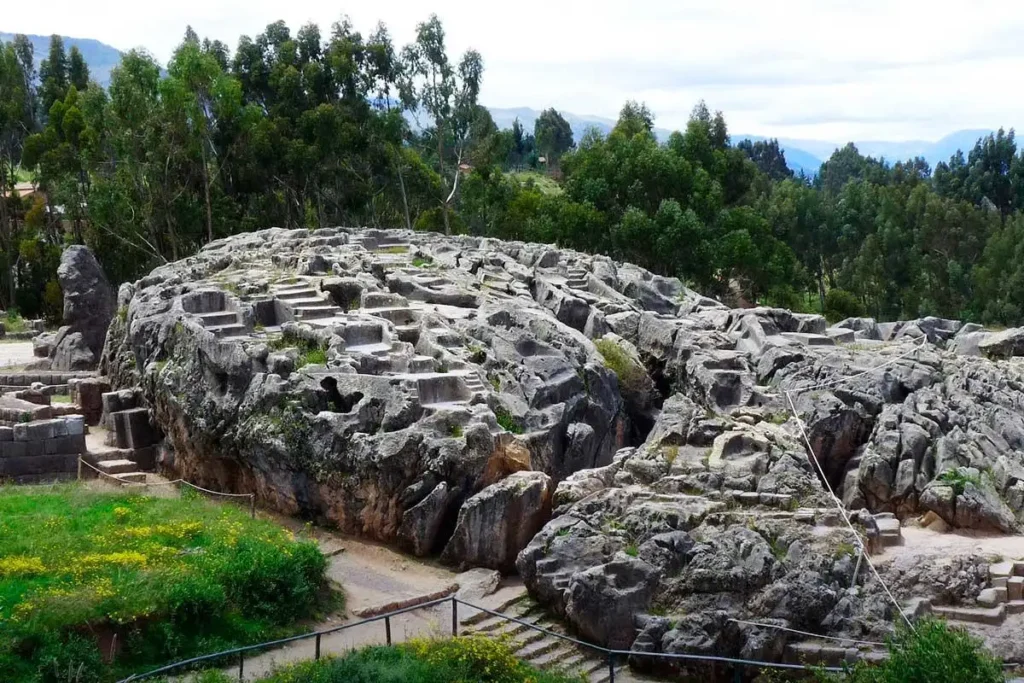
The site is particularly interesting because much of its ceremonial architecture was created directly from natural rock. Instead of constructing every element from separately cut stones, Inca builders shaped existing limestone formations, transforming the natural landscape into ceremonial spaces.
Qenqo Cusco Peru
Qenqo Cusco Peru is part of the archaeological landscape immediately outside the historic center of Cusco. Its location makes it one of the easiest archaeological sites to include in a day of sightseeing around the city.
The complex is generally associated with ceremonial and religious activities during the Inca period. Although researchers continue to debate the precise purpose of individual features, the site clearly demonstrates the importance the Incas placed on caves, rocks, water, mountains, and other natural elements.
Location and Archaeological Importance
Qenqo is situated at approximately 3,580 meters (11,745 feet) above sea level, although exact elevations can vary depending on the point measured. It sits in a highland landscape characterized by hills, grasslands, eucalyptus trees, and views toward the Cusco valley.
Its archaeological importance comes from the unusual combination of natural rock formations and deliberately modified ceremonial architecture. The complex provides valuable insight into Inca approaches to sacred landscapes, ritual spaces, and the relationship between nature and religious practice.
What the Site Is Known For
Qenqo is especially known for:
- Large carved limestone formations
- Zigzagging channels cut into rock
- Underground ceremonial spaces
- Stone platforms and niches
- Carved surfaces associated with ritual activity
- Qenqo Chico and the surrounding archaeological area
- Its connection with the wider sacred landscape of Cusco
- Its location within the scenic Qenqo Forest
Qenqo Cusco History
The history of Qenqo is closely connected with the development of Cusco as the political and religious center of the Inca Empire. Archaeological evidence indicates that the area was used before the height of the Inca state, but many of the features visible today are associated with the Inca period.
Origins and Inca Period
The precise origins of Qenqo remain difficult to establish because the site was modified over different periods. The Incas incorporated existing natural features and earlier cultural elements into their own ceremonial landscape.
During the expansion of the Inca Empire, Cusco became surrounded by important religious and administrative sites. Qenqo appears to have formed part of this larger sacred landscape, together with nearby complexes such as Sacsayhuamán, Puka Pukara, and Tambomachay.
Rather than viewing Qenqo as an isolated ruin, it is useful to understand it as one component of a much larger network of ceremonial locations around the Inca capital.
Historical Significance
The historical significance of Qenqo lies partly in what it reveals about Inca religious practices. The Incas frequently considered natural features such as caves, springs, mountains, stones, and unusual rock formations to have spiritual importance.
Qenqo illustrates this approach particularly well because the natural rock itself became part of the ceremonial architecture. The boundary between nature and construction is therefore difficult to define.
The site’s carved channels, subterranean areas, platforms, and stone surfaces suggest that rituals were performed here, although the exact nature of those ceremonies remains uncertain.
Role of the Archaeological Complex
Qenqo was likely one of several ceremonial locations used by the Inca elite and religious specialists around Cusco. Its proximity to Sacsayhuamán is especially important because both sites belong to the same broader archaeological landscape.
The complex may have been associated with ceremonies involving water, offerings, sacred objects, or other ritual activities. However, many traditional interpretations of individual features should be treated cautiously because archaeological evidence does not always provide a definitive explanation for their original purpose.
Qenqo Archaeological Site
The Qenqo Archaeological Site is relatively compact compared with major archaeological complexes such as Machu Picchu, but its architectural details make it particularly interesting. Visitors can walk around the carved rock formations and observe how the Incas transformed natural stone into ceremonial architecture.
Main Structures
The site contains several notable features, including:
- The large central carved rock
- Zigzag channels
- Stone terraces and platforms
- Niches and carved surfaces
- Underground chambers
- Ceremonial areas
- Smaller archaeological structures surrounding the principal rock
Each feature contributes to understanding how the site may have functioned as a ceremonial complex.
Carved Rocks
The carved rocks are among Qenqo’s most recognizable characteristics. The largest formations contain carefully shaped surfaces, grooves, steps, channels, and other modifications.
Some channels appear to follow zigzag patterns across the stone. Their exact function remains debated, but they demonstrate the considerable effort invested in modifying the natural rock.
The Incas did not simply build around the landscape. At Qenqo, they altered the landscape itself.
Ceremonial Areas
Several areas of Qenqo appear to have been designed for ceremonial activities. Niches and platforms may have been used for placing objects or offerings, while other spaces were probably associated with religious gatherings.
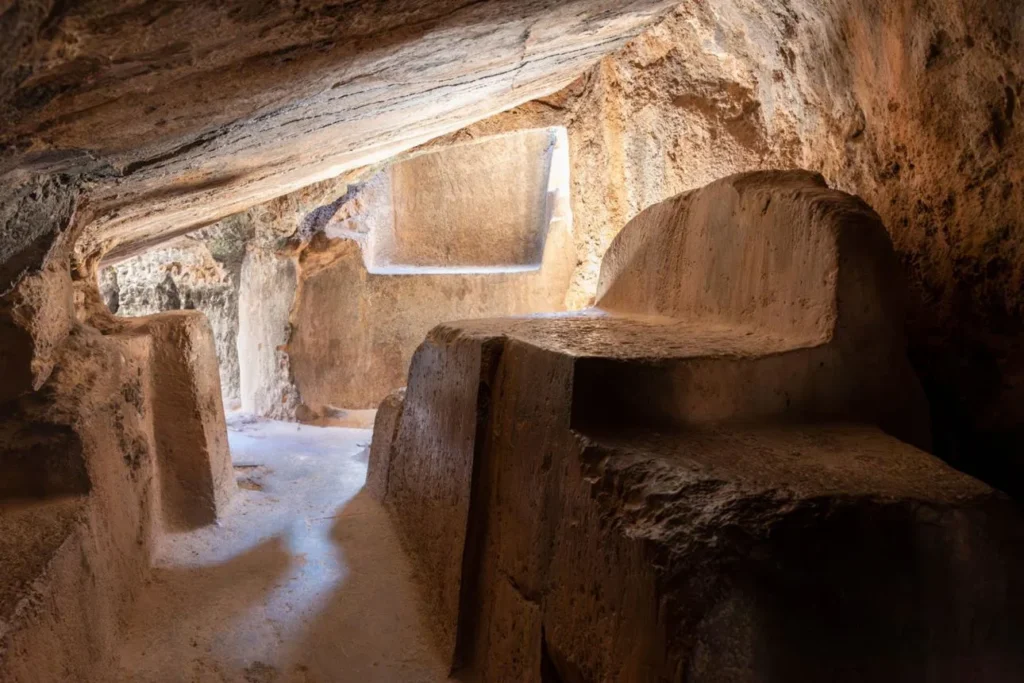
One of the most intriguing parts of the complex is its subterranean section. A passage leads into a chamber beneath the carved rock, creating a dark and enclosed environment very different from the open landscape above.
Qenqo Chico
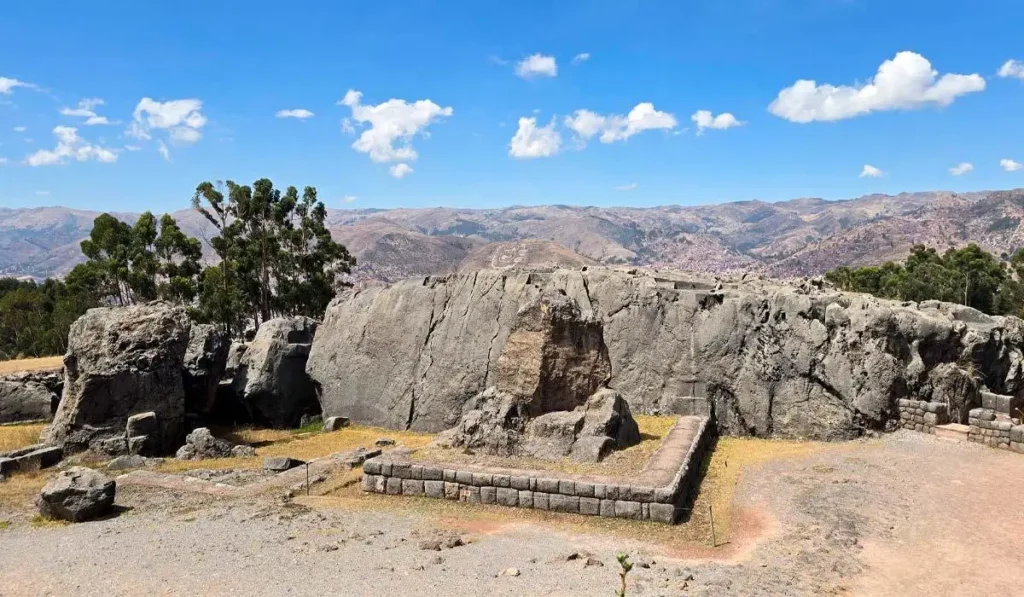
Qenqo Chico refers to a smaller archaeological sector associated with the larger Qenqo complex. It is located near the principal archaeological area and forms part of the wider group of remains distributed across the landscape.
Although visitors often focus on the main carved rock, the smaller structures are important because they show that Qenqo was more than one isolated ceremonial stone. The archaeological complex extended across the surrounding terrain.
The Underground Chamber
The underground chamber is one of Qenqo’s most memorable features. Inside, visitors can see carved stone surfaces and structures that have traditionally been interpreted as ceremonial spaces.
The dark environment may have had symbolic importance in an Andean religious context, where caves and subterranean spaces could be associated with origins, ancestors, or sacred forces.
It is important, however, not to assume that every traditional interpretation is proven. Archaeologists continue to study the site, and some of its original functions remain uncertain.
Qenqo Cusco Altitude
One of the most important things to know before visiting is the Qenqo Cusco altitude. The archaeological site is located at roughly 3,580 meters (11,745 feet) above sea level.
Altura de Qenqo
The altura de Qenqo is slightly higher than the central areas of Cusco. This difference may not seem significant, but visitors who have recently arrived in the Andes can notice the thinner air.
Cusco itself sits at approximately 3,400 meters (11,150 feet), while Qenqo is situated higher on the hills surrounding the city.
Elevation Compared with Cusco
Because Qenqo is located above Cusco, visitors may experience more noticeable exertion when walking uphill or climbing steps.
The archaeological site does not generally require a long hike, but the combination of elevation, uneven ground, stairs, and walking can make the visit physically demanding for travelers who have not yet acclimatized.
Considerations for Visitors
To make your visit more comfortable:
- Walk slowly, especially during the first days in Cusco.
- Drink water regularly.
- Avoid rushing between archaeological areas.
- Take breaks whenever necessary.
- Wear comfortable shoes with good grip.
- Allow time to acclimatize before strenuous activities.
- Protect yourself from strong Andean sunlight.
Altitude affects people differently, so listening to your body is more important than trying to maintain a fast sightseeing pace.
Qenqo Forest and Surroundings
The archaeological site is surrounded by a natural landscape commonly known as Qenqo Forest. This area adds another dimension to the visit because the archaeological ruins are not separated from nature by an urban environment.
Qenqo Forest
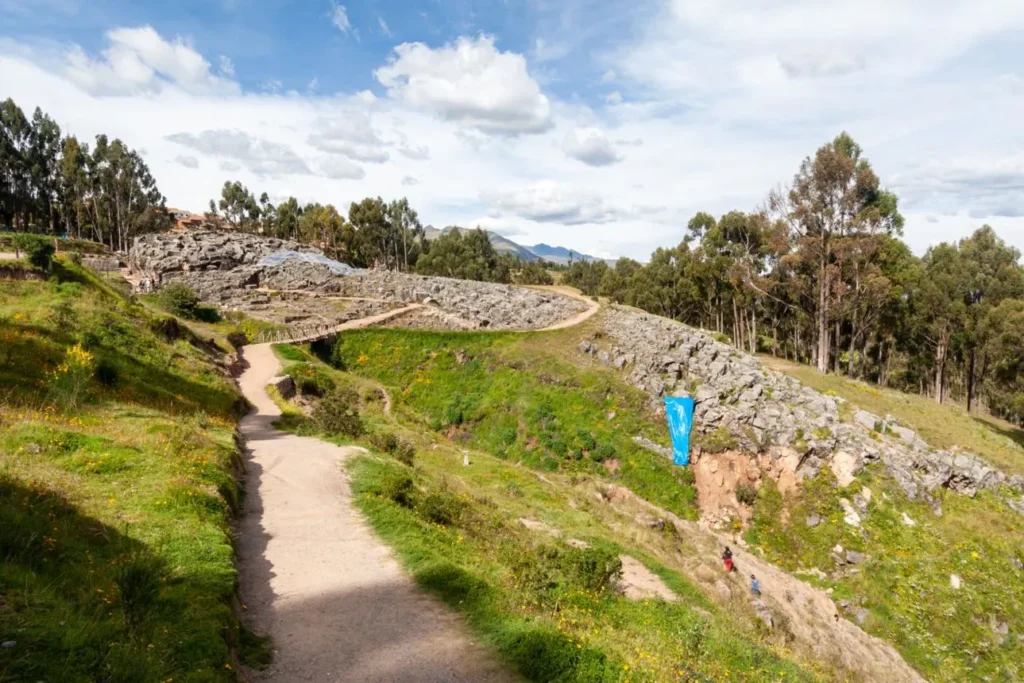
The Qenqo Forest is characterized by trees, open spaces, hills, and walking paths surrounding the archaeological complex. It is particularly popular with visitors who want to combine sightseeing with a peaceful walk.
The forest also provides a scenic setting for photographs of the archaeological structures.
Eucalyptus Trees
Eucalyptus trees are a prominent feature of the surrounding landscape. Their tall trunks and distinctive leaves create a recognizable Andean atmosphere around Qenqo.
Although eucalyptus is not an original native Andean tree, these plantations have become an important visual characteristic of many highland landscapes around Cusco.
Natural Landscape
The natural landscape around Qenqo includes open grassland, rocky terrain, hills, and views across parts of the Cusco area. Depending on the weather and season, the landscape can appear dramatically different.
During the rainy season, vegetation can become greener, while the dry season often produces a more golden appearance.
Parque Qenqo
The wider area is sometimes referred to as Parque Qenqo, reflecting the recreational and natural spaces around the archaeological site. It is a pleasant area for walking and taking photographs while exploring the ruins.
For travelers who enjoy combining cultural attractions with nature, Qenqo Forest can be one of the most enjoyable parts of the visit.
How to Get to Qenqo from Cusco
One of Qenqo’s major advantages is its proximity to the city. The site can be reached by vehicle, tour, taxi, or on foot depending on your starting point and physical condition.
Transportation
Most visitors reach Qenqo as part of a Cusco archaeological city tour. This is convenient because the same excursion can include several nearby sites.
Private transportation is another option, especially for travelers who want to spend more time at each archaeological complex.
Taxis can also take visitors toward the archaeological area, although travelers should make sure they agree on the destination and understand where they will be dropped off.
Walking
Walking to Qenqo from Cusco is possible, but it involves uphill sections and high-altitude conditions. The distance depends on your starting point.
For travelers already acclimatized and accustomed to walking at altitude, walking can be an enjoyable way to experience the transition from the urban center to the surrounding hills.
However, visitors arriving in Cusco for the first time may prefer transportation, especially if they plan to visit several archaeological sites on the same day.
Location
Qenqo is located northeast of central Cusco, in the hills above the city. Its location makes it particularly convenient to combine with Sacsayhuamán and other nearby archaeological attractions.
Route from Cusco
A typical sightseeing route can begin in central Cusco and continue toward the archaeological sites above the city. Depending on the itinerary, travelers may visit Sacsayhuamán first before continuing toward Qenqo, Puka Pukara, and Tambomachay.
Because these sites are relatively close to one another, a single day can cover several major attractions.
Qenqo Cusco Photos
Qenqo is an excellent place for photography because the site combines archaeological architecture with dramatic natural scenery.
Archaeological Structures
Photographs of the main archaeological structures can highlight the contrast between precisely carved stone and irregular natural rock.
The best images often focus on the textures of the stone rather than simply photographing the entire complex from a distance.
Carved Stones
The carved stones provide some of the most distinctive photographic subjects at Qenqo. Zigzag channels, steps, niches, and unusual rock formations reveal details that can easily be missed during a quick visit.
When photographing the carved surfaces, take time to look closely at the craftsmanship and the relationship between the modifications and the original rock.
Surrounding Landscape
The surrounding Qenqo Forest provides opportunities for wider landscape photographs. Eucalyptus trees, hills, stone walls, and archaeological remains can all be incorporated into a single composition.
Morning and afternoon light can create different effects on the stone surfaces, while cloudy conditions often emphasize the textures and contours of the archaeological site.
Visiting Qenqo
A visit to Qenqo does not usually require an entire day by itself. However, the amount of time you should spend depends on your interest in archaeology and whether you are visiting the surrounding sites.
Recommended Time
For most travelers, approximately 30 minutes to 1 hour is enough to explore the principal areas of Qenqo without rushing.
Visitors particularly interested in archaeology, photography, or the natural landscape may want to allow additional time.
A practical visit can include:
- Exploring the main carved rock
- Walking through the ceremonial areas
- Viewing the underground chamber
- Examining the carved channels
- Visiting Qenqo Chico
- Walking through the surrounding forest
- Taking photographs of the archaeological landscape
What to See
The most important features to prioritize include the main carved rock, ceremonial spaces, underground chamber, carved channels, and surrounding archaeological structures.
Rather than focusing only on individual ruins, try to understand Qenqo as a complete landscape. The relationship between the rock, underground spaces, open ceremonial areas, and surrounding hills is one of the site’s most fascinating characteristics.
Qenqo with Other Nearby Archaeological Sites
One of the best ways to experience Qenqo is to combine it with other archaeological attractions around Cusco. These sites form a natural sightseeing circuit because they are relatively close to one another.
Qenqo and Sacsayhuamán
Sacsayhuamán is one of the most impressive archaeological complexes near Cusco. Its enormous stone walls create a striking contrast with Qenqo’s smaller and more intimate ceremonial spaces.
Visiting both sites allows travelers to appreciate different aspects of Inca architecture and landscape design.
Qenqo and Puka Pukara
Puka Pukara is another archaeological complex located along the route toward the higher areas beyond Cusco. Its architecture is associated with terraces, walls, and structures that may have had administrative or military functions.
Combining Puka Pukara with Qenqo creates a broader understanding of the network of sites surrounding the Inca capital.
Qenqo and Tambomachay
Tambomachay is known for its water-related architecture and carefully constructed channels and fountains. It is particularly interesting when visited alongside Qenqo because both sites demonstrate the importance of natural elements within the Inca ceremonial landscape.
A combined itinerary can therefore show how the Incas incorporated stone, water, hills, and natural environments into their architecture.
A Typical Archaeological Circuit
A popular combination can include:
- Sacsayhuamán
- Qenqo
- Puka Pukara
- Tambomachay
The exact order may vary depending on the tour, transportation, opening conditions, and the time available.
Why Visit Qenqo Cusco?
Qenqo may not have the monumental scale of Machu Picchu or the enormous stone walls of Sacsayhuamán, but its appeal comes from something different: the close relationship between architecture, natural rock, and ceremonial traditions.
The site provides an opportunity to see how the Incas transformed the landscape rather than simply building structures on top of it. Its carved rocks, subterranean chambers, ceremonial spaces, and surrounding forest make it a memorable stop for travelers interested in the spiritual and cultural dimensions of the Inca world.
For visitors staying in Cusco, Qenqo is also practical. It is close to the city, can be included in a half-day or full-day sightseeing route, and pairs naturally with several other important archaeological sites.
Practical Tips for a Qenqo Visit
Before visiting Qenqo, a little preparation can make the experience more comfortable.
What to Bring
Consider bringing:
- Comfortable walking shoes
- Water
- Sun protection
- Hat or cap
- Sunglasses
- Light layers
- Rain protection during the rainy season
- Camera or smartphone
- Small backpack
- Personal medication if needed
Weather in the Cusco highlands can change quickly, so dressing in layers is generally a good idea.
Best Approach to the Visit
Do not rush through Qenqo simply because the archaeological complex is relatively small. Some of its most interesting characteristics are details that become apparent only when you take time to observe the stone.
Look carefully at the channels, carved surfaces, niches, platforms, and natural formations. Then step back and consider how these features fit into the surrounding landscape.
Final Thoughts on Qenqo Cusco
Qenqo Cusco is a fascinating archaeological site for travelers who want to explore the cultural and ceremonial side of the Inca civilization. Its name, unusual carved rocks, underground spaces, ceremonial areas, and natural surroundings make it different from many other archaeological attractions around Cusco.
At an altitude of approximately 3,580 meters, Qenqo also offers beautiful views and a distinctive highland environment. The surrounding Qenqo Forest, eucalyptus trees, and open landscape add to the experience, making the visit about more than archaeology alone.
Whether you visit Qenqo independently or as part of a Cusco archaeological circuit, allow enough time to appreciate the details. Combined with Sacsayhuamán, Puka Pukara, and Tambomachay, Qenqo helps reveal the remarkable archaeological landscape that surrounds the former capital of the Inca Empire.
Leave a Reply