Cusco Historic Center is the cultural heart of Cusco and one of the most fascinating urban destinations in Peru. Walking through its streets means moving between different periods of history: the Inca Empire, the Spanish colonial era, and modern Peru. Massive Inca stone walls support colonial buildings, centuries-old churches stand beside lively cafés, and traditional neighborhoods such as San Blas preserve the artistic character of the city.
For travelers visiting Cusco, the historic center is much more than a place to pass through before visiting Machu Picchu. It is a destination worth exploring slowly, with plazas, museums, churches, archaeological remains, viewpoints, markets, restaurants, and narrow cobblestone streets providing something to discover around almost every corner.
This guide covers the history of Cusco Historic Center, the most important historic sites in Cusco, the Cusco Cathedral, historic churches and monuments, museums, a practical Cusco Historic Center map, things to do, tours, transportation from the airport, and frequently asked questions.
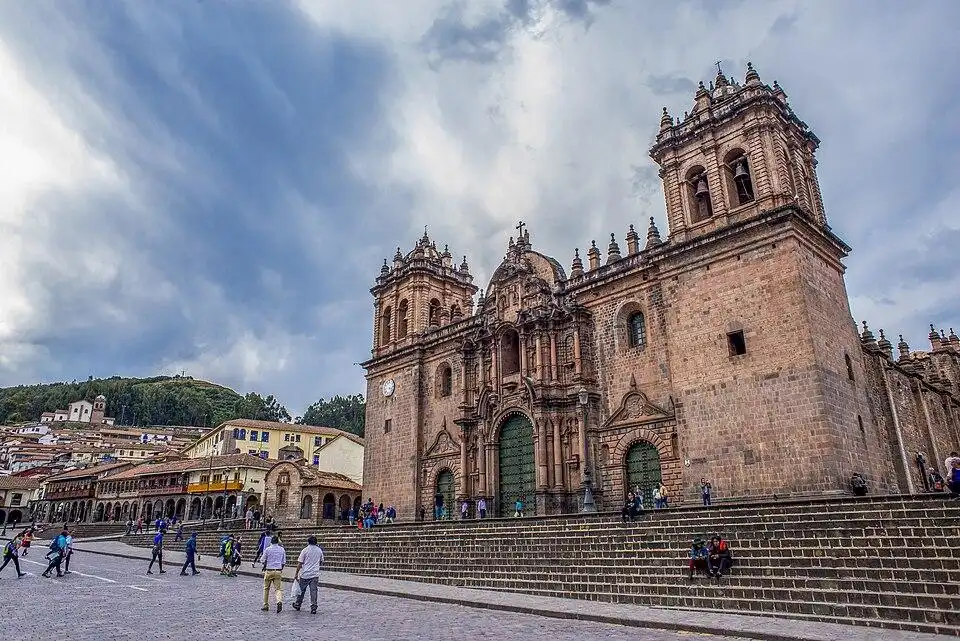
History of Cusco Historic Center
The history of Cusco Historic Center stretches across centuries and reflects the extraordinary transformation of the city from the capital of the Inca Empire into one of the most important colonial cities in South America. Its architecture is particularly remarkable because Inca foundations, walls, Spanish colonial buildings, churches, palaces, and modern businesses exist within the same urban landscape.
Cusco before the Spanish conquest
Cusco became the political, religious, and administrative center of the Inca Empire. Under the Inca rulers, the city was carefully planned and developed with monumental temples, palaces, ceremonial spaces, roads, and sophisticated stonework.
The central area was especially important. The great ceremonial plaza that occupied the heart of the Inca capital was considerably larger than today’s Plaza de Armas. Important ceremonies, celebrations, political events, and religious activities took place there.
The Inca city was designed with impressive precision. Streets connected important buildings and neighborhoods, while stone walls were constructed using enormous blocks fitted together without traditional mortar. Many of these walls survived the Spanish conquest and can still be seen throughout the historic center.
The Spanish colonial transformation
After the Spanish conquest in the 16th century, Cusco was transformed. Spanish authorities constructed churches, monasteries, mansions, and public buildings, frequently using existing Inca structures as foundations.
This created the architectural character that makes Cusco unique today. Instead of completely replacing the earlier city, Spanish colonial architecture was built directly over or alongside Inca structures.
The result is visible everywhere in the historic center. A colonial house may have a traditional Spanish-style balcony while its lower walls consist of perfectly fitted Inca stones. A church may stand above the foundations of an important Inca temple or palace.
Cusco Historic Center as a living heritage area
Today, Cusco Historic Center remains a living part of the city rather than simply an archaeological site. Residents, artisans, restaurants, hotels, museums, churches, stores, and travelers share the same streets and plazas.
This combination of daily life and historical architecture is one of the reasons Cusco is so appealing. You can visit an ancient Inca wall in the morning, explore a colonial church, have lunch in a traditional restaurant, visit an art museum, and watch the city come alive around the Plaza de Armas in the evening.
Historic Sites in Cusco
The historic center contains an extraordinary concentration of monuments. Many of the most important attractions are within walking distance of one another, making the area ideal for exploration on foot.
Plaza de Armas
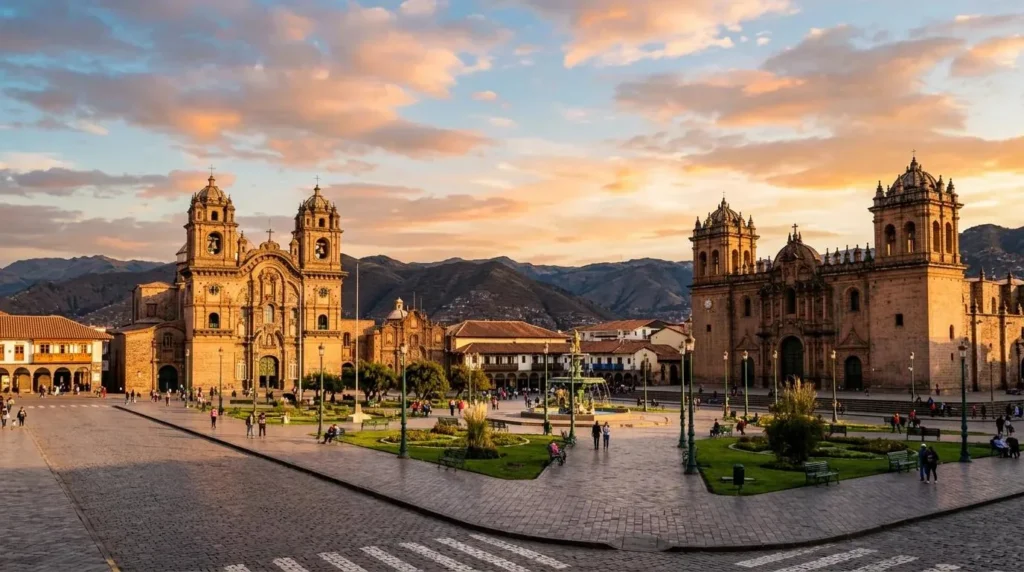
The Plaza de Armas is the natural starting point for discovering Cusco Historic Center. It is surrounded by colonial arcades, historic churches, restaurants, shops, and some of the city’s most important monuments.
The square occupies a central position in the modern city, but its importance goes back to the Inca period. Today, it is one of the busiest places in Cusco and a popular meeting point for locals and travelers.
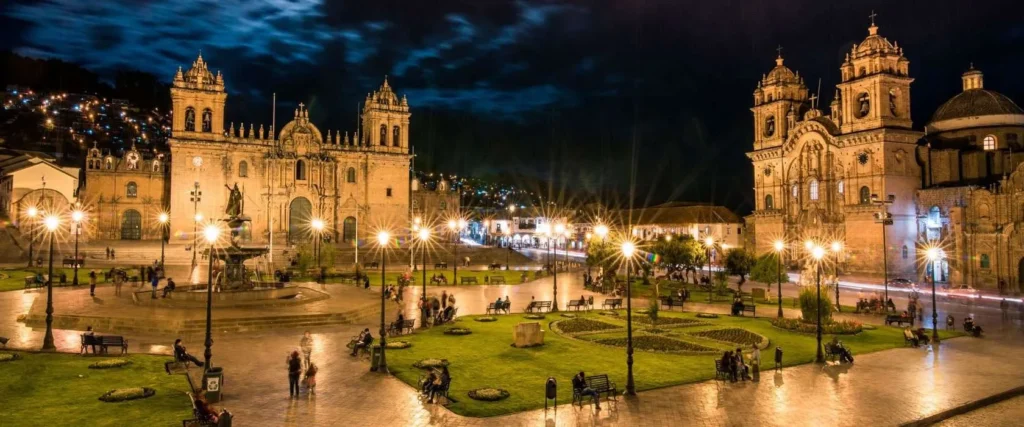
During the day, the plaza offers excellent opportunities for photography and people-watching. In the evening, its illuminated churches and colonial buildings create a completely different atmosphere.
Hatun Rumiyoc and the Twelve-Angled Stone
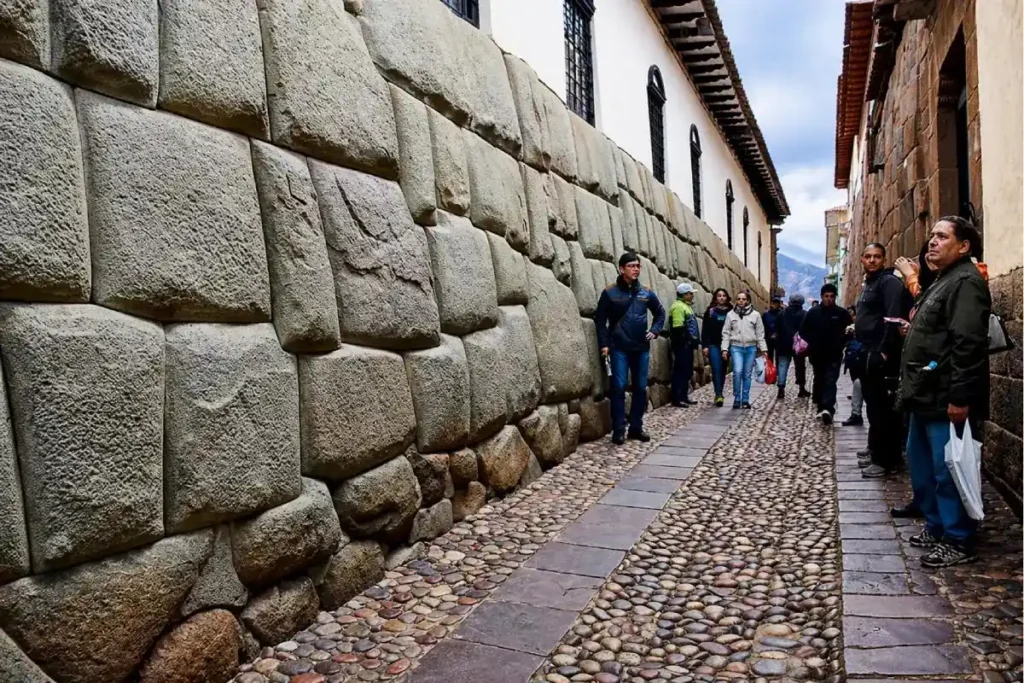
One of the most famous examples of Inca stonework is found along Hatun Rumiyoc Street. The wall demonstrates the precision with which Inca builders shaped enormous stones to fit tightly together.
The Twelve-Angled Stone has become one of the best-known examples of this technique. Its unusual shape allows it to connect seamlessly with the stones surrounding it.
Visitors should look beyond the famous stone itself. The entire wall is an important demonstration of Inca engineering and the sophisticated construction techniques used in the imperial capital.
Qorikancha and the Temple of the Sun
Qorikancha, also known as the Temple of the Sun, was one of the most important religious complexes in the Inca Empire. It was dedicated to Inti, the sun deity, and occupied a central position in Inca religious life.
The complex is particularly interesting because the remains of Inca architecture are combined with the colonial church and monastery of Santo Domingo. The contrast between the finely fitted Inca stonework and the later colonial construction illustrates the layered history of Cusco.
Loreto Street
Loreto Street is another excellent location for seeing Inca masonry within the historic center. The narrow street preserves long sections of precisely constructed stone walls.
It is also a good example of how modern Cusco developed around its Inca foundations. Travelers can walk through a busy urban area while seeing architecture that is centuries old.
San Blas
San Blas is one of the most atmospheric neighborhoods near the historic center. Known for its artisans, galleries, workshops, narrow streets, and traditional character, it is especially popular with travelers interested in arts and crafts.
The neighborhood is built on steep streets, so reaching some areas requires walking uphill. The effort is worthwhile, particularly for visitors who want to experience a quieter side of Cusco and enjoy views across the city.
Cusco Cathedral
The Cusco Cathedral, officially known as the Cathedral Basilica of the Assumption of the Virgin, dominates the northeastern side of the Plaza de Armas and is one of the most important religious monuments in the city.
Its construction began during the colonial period and developed over several stages. The building incorporates different architectural influences, creating an impressive combination of Renaissance, Baroque, and other colonial styles.
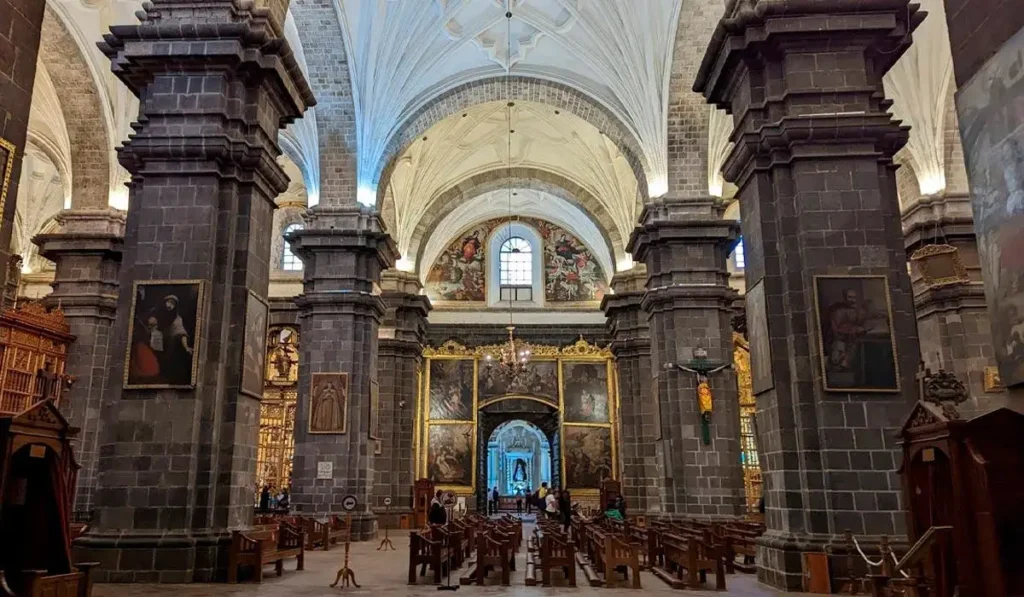
Inside, the cathedral contains an important collection of religious art associated with the Cusco School of painting. Its chapels, altars, carved woodwork, paintings, and religious objects provide an opportunity to understand how European artistic traditions were adapted to the Andean environment.
What to see inside Cusco Cathedral
Visitors interested in history and art should pay attention to:
- Colonial paintings and religious artwork.
- Elaborately decorated altars.
- Carved wooden details.
- Religious sculptures.
- Decorative gold and silver work.
- The famous representation of the Lord of the Earthquakes.
- Artistic elements associated with the Cusco School.
The cathedral is not simply an architectural attraction. It also helps explain the cultural transformation that took place in Cusco after the Spanish conquest.
Historic Churches and Monuments
Cusco’s historic center contains numerous churches and religious buildings, each contributing to the city’s architectural identity. Visiting several of them gives travelers a better understanding of colonial Cusco rather than focusing only on the cathedral.
Church of the Society of Jesus
The Church of the Society of Jesus, or Compañía de Jesús, is located beside the Plaza de Armas. Its ornate façade makes it one of the most visually impressive colonial churches in Cusco.
Its location directly on the main square makes it easy to combine with a visit to the cathedral and the surrounding historic streets.
Iglesia de la Merced
The Church of La Merced is another important religious monument in central Cusco. Its architecture and interior decoration reflect the wealth and artistic development of the colonial period.
The church is located close enough to the main square to include in a walking itinerary through the center.
Church of San Francisco
The San Francisco complex is another significant religious and historical site. Its presence reflects the importance of religious orders in the development of colonial Cusco.
The surrounding area also connects naturally with traditional streets and markets, making it a useful stop during a broader walking tour.
Santo Domingo and Qorikancha
The Santo Domingo complex deserves special attention because of its relationship with Qorikancha. Here, visitors can see the physical contrast between Inca foundations and colonial religious architecture.
This is one of the clearest places in Cusco to understand the layers of history that define the city.
Cusco Historical Museum
For travelers who want more context before or after walking through the streets, Cusco’s museums provide an opportunity to understand the civilizations and historical periods represented in the city.
A historical museum visit can make the architecture easier to interpret. Instead of seeing an old stone wall simply as an impressive construction, visitors can understand how it formed part of the Inca capital and how the city changed following the Spanish conquest.
Museums worth including in a Cusco itinerary
Depending on your interests, consider museums and cultural spaces associated with:
- Inca and pre-Inca archaeology.
- Colonial religious art.
- The history of Cusco.
- Machu Picchu and archaeological discoveries.
- Traditional Andean culture.
- Contemporary Peruvian and Cusco art.
- Inca architecture and urban development.
A museum visit is particularly useful on a first day in Cusco because it provides historical context for the archaeological sites you will see later in the Sacred Valley or on a Machu Picchu trip.
Other Historic Sites
The historic center has many smaller attractions that are easy to overlook when travelers concentrate only on the major monuments.
Inca walls and colonial mansions
Throughout central Cusco, look carefully at building foundations and street corners. Many colonial buildings were constructed over earlier Inca structures.
Traditional balconies, carved doorways, stone portals, courtyards, and massive foundations reveal the city’s colonial history, while the underlying masonry often shows the sophistication of Inca construction.
Plaza Regocijo
Plaza Regocijo is located close to the Plaza de Armas but generally feels calmer. It is surrounded by historic architecture and provides a pleasant place to pause during a walking tour.
San Pedro Market
San Pedro Market provides a different perspective on Cusco. Rather than focusing exclusively on monuments, visitors can experience everyday commerce, local food, traditional products, fruits, vegetables, spices, and Andean ingredients.
It can be an interesting addition to a historic-center walking itinerary for travelers who want to experience contemporary Cusco as well as its historical monuments.
Things to Do in Cusco City Center
One of the greatest advantages of staying in or near the historic center is the number of activities available without requiring long transportation times.
1. Walk around the Plaza de Armas
Start your exploration at the Plaza de Armas. Walk around the square, admire the surrounding architecture, and use it as your orientation point.
Try visiting both during the day and after sunset because the atmosphere changes significantly.
2. Explore the Inca streets
Walk through streets such as Hatun Rumiyoc and Loreto to see some of the city’s most impressive surviving Inca masonry.
Don’t rush. Some of the most interesting details are at street level and can easily be missed while moving between major attractions.
3. Visit Cusco’s churches
Include at least one or two churches in your itinerary. The cathedral, Compañía de Jesús, La Merced, Santo Domingo, and San Francisco each provide a different perspective on colonial architecture and religious art.
4. Visit Qorikancha
Qorikancha is especially valuable for travelers interested in Inca history because it demonstrates the relationship between the ancient religious complex and the later colonial structure.
5. Explore San Blas
Walk uphill toward San Blas to explore artisan shops, galleries, small plazas, and traditional streets.
The neighborhood is also a good place to look for locally made textiles, jewelry, artwork, and souvenirs.
6. Visit museums
Museums can help you understand the historical background of the monuments you are seeing. Consider visiting one or two rather than trying to see every museum in a single day.
7. Try traditional Cusco food
The historic center has restaurants serving Peruvian and Andean dishes. Depending on your preferences, you can try traditional Cusco specialties or simply use the central area to explore Peru’s broader culinary culture.
8. Watch the city from a viewpoint
San Blas and other elevated areas provide excellent views across the rooftops of Cusco. Late afternoon is particularly attractive when the changing light begins to illuminate the surrounding hills and buildings.
9. Shop for traditional crafts
Cusco is one of Peru’s best places to purchase traditional textiles, handicrafts, artwork, jewelry, and souvenirs.
When shopping, look for products that are genuinely handmade or produced by local artisans if supporting traditional craftsmanship is important to you.
10. Explore at night
Cusco Historic Center has a completely different atmosphere after dark. The Plaza de Armas, churches, restaurants, cafés, and narrow streets become illuminated, creating excellent opportunities for evening walks and photography.
Cusco Historic Center Map
Understanding the basic layout of Cusco Historic Center makes exploring the city much easier. The Plaza de Armas is the best reference point because many major attractions are located within walking distance.
From the Plaza de Armas, you can organize your exploration into several areas:
- Northeast: Cusco Cathedral and surrounding historic streets.
- East: Hatun Rumiyoc, San Blas, and artisan areas.
- Southeast: Qorikancha and Santo Domingo.
- South: Avenida El Sol and areas leading toward the modern center.
- West: San Francisco, San Pedro Market, and surrounding historic streets.
- Northwest: Traditional streets leading toward higher neighborhoods.
How to use the map when planning your visit
Rather than choosing attractions randomly, group nearby sites together. This saves walking time and allows you to spend more time actually experiencing the monuments.
For example, one walking route could combine the Plaza de Armas, Cusco Cathedral, Compañía de Jesús, Loreto Street, and nearby Inca walls. Another could focus on Qorikancha, Santo Domingo, San Blas, and viewpoints.
Remember that Cusco is at high altitude and many streets are steep. A route that looks short on a map can feel considerably more demanding than it would at sea level.
Cusco Historic Center Tours
A guided tour is one of the easiest ways to understand the historic center because a knowledgeable guide can explain what you are looking at rather than simply showing you the buildings.
Walking tours
Walking tours are particularly appropriate for Cusco because many important attractions are concentrated in a relatively small area.
A good walking tour can include:
- Plaza de Armas.
- Cusco Cathedral.
- Compañía de Jesús.
- Inca walls.
- Twelve-Angled Stone.
- Qorikancha.
- Colonial streets.
- San Blas.
- Traditional markets.
Private tours
Private tours are useful for travelers who want more flexibility. You can spend additional time at a museum, stop for photographs, adjust the walking pace, or focus heavily on a particular interest such as Inca architecture, colonial art, photography, or food.
Self-guided exploration
Independent travelers can also explore the historic center without a guide. The main advantage is flexibility, but the disadvantage is that many architectural details and historical connections can be difficult to recognize without explanation.
A combination can work well: explore independently for part of the day and take a guided historical walk to understand the most important monuments.
How to Get to Cusco Historic Center from the Airport
Cusco’s airport is relatively close to the historic center, making transportation straightforward for most visitors.
Cusco airport to historic center
The easiest option for most travelers arriving with luggage is a taxi or arranged private transfer. The drive normally takes around 15–30 minutes depending on traffic and the exact location of your accommodation.
Travel time can vary considerably during busy periods, so it is better not to assume that a short distance always means a short journey.
Another option is public transportation, but travelers with luggage may find it less convenient, particularly if they are staying on a narrow or steep street where vehicles cannot stop directly outside the accommodation.
If you are staying in the historic center, confirm the exact location of your hotel before choosing your transportation. Some historic streets have restricted vehicle access.
Cusco historic center to airport
For the journey from the historic center to the airport, allow extra time for traffic and airport procedures. A taxi or private transfer is usually the most convenient choice, especially for early-morning or international flights.
If you have a specific departure time, it is better to arrange transportation in advance rather than relying on finding a vehicle at the last minute.
Arrival tips for first-time visitors
Cusco sits at high altitude, so the airport transfer is also the beginning of your adjustment to the Andes. If possible, avoid filling your first few hours with strenuous activities.
A relaxed walk around the Plaza de Armas, a quiet meal, and time to rest can be a better introduction than immediately attempting a demanding excursion.
Suggested One-Day Cusco Historic Center Itinerary
If you have only one full day to explore the city, you can cover many of the principal attractions by organizing them geographically.
Morning: Inca and colonial history
Begin around the Plaza de Armas and visit the cathedral. From there, walk through the historic streets toward Hatun Rumiyoc and the Twelve-Angled Stone.
Continue toward Qorikancha and Santo Domingo, taking time to appreciate the contrast between Inca and colonial architecture.
Afternoon: Museums, markets, and San Blas
After lunch, choose a museum based on your interests. Then walk toward San Blas.
Explore the neighborhood’s artisan shops and narrow streets before heading toward one of the viewpoints overlooking Cusco.
Evening: Plaza de Armas and dinner
Return to the central area around sunset. The historic buildings become especially atmospheric as the lights come on.
Finish your day with dinner in the historic center and, if you still have energy, take a relaxed evening walk around the Plaza de Armas.
Best Time to Explore Cusco Historic Center
Cusco can be visited throughout the year, but the experience varies depending on the season.
The dry season generally offers more favorable conditions for walking and photography, while the rainy season can bring cloudy skies and showers. However, rainy periods can also produce beautiful atmospheric conditions and fewer visitors at certain attractions.
For walking tours, mornings are often comfortable because temperatures can rise later in the day. Early morning and late afternoon are also attractive for photography.
Regardless of the season, bring comfortable walking shoes, sun protection, and a light layer because temperatures can change quickly at high altitude.
Practical Tips for Visiting the Historic Center
A little preparation can make your visit considerably more comfortable.
- Wear comfortable shoes because many streets are cobblestoned.
- Expect steep streets, particularly around San Blas.
- Bring sun protection even when the temperature feels cool.
- Carry some cash for small purchases and markets.
- Take time to acclimatize to Cusco’s altitude.
- Check opening hours for museums and churches before planning a detailed itinerary.
- Respect restrictions on photography inside religious buildings.
- Avoid rushing between attractions.
- Carry water during longer walking routes.
- Be careful with personal belongings in crowded areas.
- Consider a guide if you want detailed historical explanations.
- Allow extra time for transportation when heading to the airport.
Why Cusco Historic Center Is Worth Visiting
Cusco Historic Center is special because its history is not confined to museums or archaeological parks. It is visible in ordinary streets, building foundations, plazas, churches, courtyards, doorways, and walls.
The city tells its story through layers. Inca engineering appears beneath colonial architecture. Spanish churches stand beside surviving indigenous traditions. Traditional neighborhoods continue to function as residential and artistic communities. Modern restaurants and hotels occupy buildings with centuries of history.
For travelers visiting Peru, spending time in the historic center provides a deeper understanding of the region before continuing to destinations such as the Sacred Valley or Machu Picchu.
FAQ About Cusco Historic Center
What is the Cusco Historic Center?
Cusco Historic Center is the central historic district of Cusco, Peru. It contains many of the city’s most important Inca, colonial, religious, architectural, cultural, and artistic attractions.
What is the main attraction in Cusco Historic Center?
The Plaza de Armas is generally the best starting point. From there, visitors can easily reach the cathedral, Compañía de Jesús, historic streets, Inca walls, Qorikancha, museums, and other attractions.
How much time do you need in Cusco Historic Center?
A minimum of one full day allows you to see many major attractions, but two or three days provide a much better experience. Additional time allows you to explore museums, San Blas, markets, churches, restaurants, and smaller historic streets without rushing.
Is Cusco Historic Center walkable?
Yes. Many of the principal attractions are within walking distance of each other. However, Cusco’s altitude, cobblestone streets, and steep hills—especially around San Blas—can make walking more physically demanding.
Is Cusco Cathedral inside the historic center?
Yes. Cusco Cathedral is located directly on the Plaza de Armas and is one of the most important monuments in the historic center.
Where can you see Inca walls in Cusco?
Important examples can be seen along Hatun Rumiyoc, Loreto Street, Qorikancha, and throughout several streets surrounding the central area.
Is San Blas part of Cusco Historic Center?
San Blas is closely connected to the historic center and is one of the most important traditional neighborhoods to visit while exploring central Cusco. It is particularly known for artisans, galleries, narrow streets, and elevated views.
Can you visit Cusco Historic Center without a tour?
Yes. The area is easy to explore independently. However, a guided tour can provide much more context about the Inca and colonial history behind the architecture.
How far is Cusco airport from the historic center?
The airport is relatively close to central Cusco. Depending on traffic and the exact destination, the journey by car generally takes around 15–30 minutes.
What should you see first in Cusco Historic Center?
For a first visit, begin at the Plaza de Armas. From there, visit the cathedral and surrounding churches, explore the Inca walls and historic streets, and continue toward Qorikancha or San Blas depending on your interests.
Is Cusco Historic Center worth visiting before Machu Picchu?
Absolutely. Exploring Cusco first provides important historical and cultural context for understanding the Inca civilization and the broader Andean region. It also allows travelers to appreciate how Inca and colonial history continue to coexist in modern Peru.
What makes Cusco Historic Center unique?
Its greatest strength is the combination of different historical layers within one living city. Inca stonework, colonial churches, traditional neighborhoods, museums, markets, restaurants, and modern tourism all exist within the same historic environment.
Final Thoughts
The Cusco Historic Center is not simply a collection of old buildings. It is the place where the history of Cusco can be experienced most directly. From the monumental Plaza de Armas and Cusco Cathedral to the precise Inca walls of Hatun Rumiyoc, Qorikancha, San Blas, museums, markets, and colonial churches, the city offers an extraordinary concentration of culture within a walkable area.
Whether you spend one day exploring the major landmarks or several days discovering its quieter streets and neighborhoods, the historic center deserves to be treated as a destination in its own right. Take your time, look closely at the architecture, learn the stories behind the monuments, and allow yourself to experience modern Cusco alongside its remarkable past.
Leave a Reply